Sportswear Sublimation: Temperature and Speed Settings
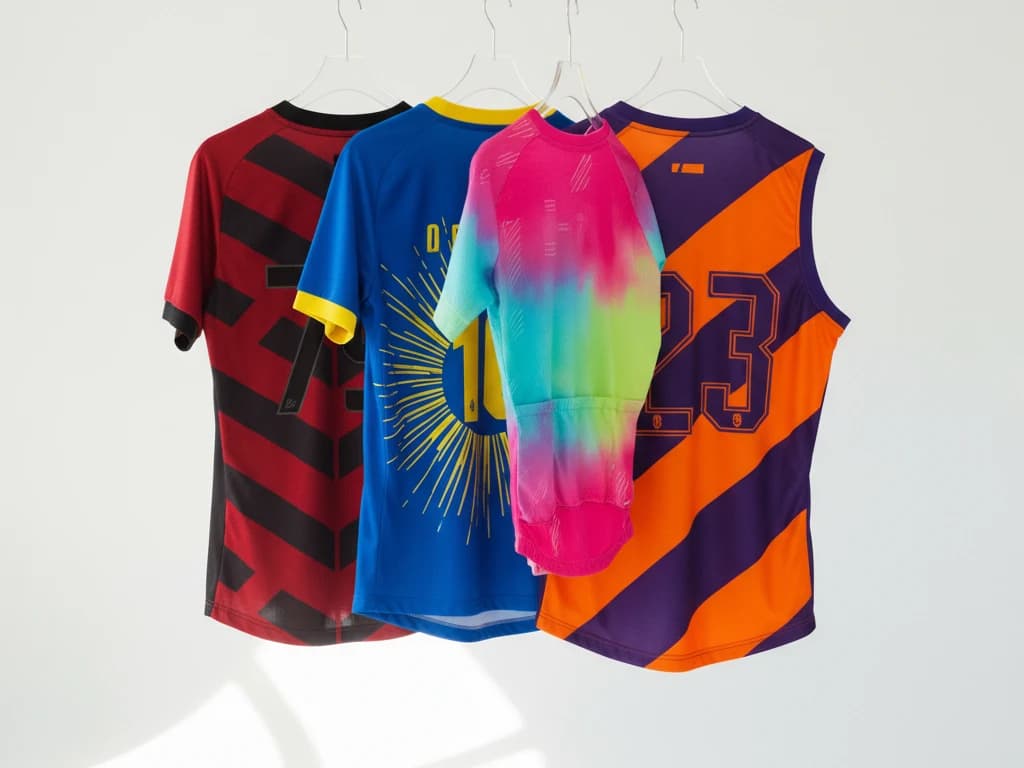
Polyester jersey, lycra blends, performance mesh — every sportswear fabric demands a different temperature. Field-tested starting parameters on Mearic machines and what to do when results drift.
Sportswear is one of the toughest sublimation applications. Because fabrics are lycra/elastane blends — elastic, thermally sensitive. 5 °C too hot → fabric melts, color fades. 5 °C too cold → ink won't bond, washes out. Finding the right parameter means thinking about fabric type, calender speed, and print density together.
Starting temperature by fabric type
| Fabric | Temperature | Speed | Dwell |
|---|---|---|---|
| 100% polyester jersey | 195–205 °C | 1.5–2.5 m/min | 25–40 s |
| Polyester + 5–10% elastane (formfit) | 190–200 °C | 1.5–2.0 m/min | 30–45 s |
| Polyester + lycra (high elastic) | 185–195 °C | 1.0–1.5 m/min | 40–60 s |
| Polyester mesh | 200–210 °C | 2.0–3.0 m/min | 20–30 s |
| Blend (50/50 polyester-cotton) | Sublimation not recommended | — | — |
Handling elastane blends
Lycra/elastane fabrics lose their stretch if held over 200 °C for too long. Critical for sportswear — the form has to keep its elasticity. Keep temperature around 195 °C, dwell limited to 30-45 seconds. If color still won't bond, raise pressure instead of speed: belt tension can run 0.5-1 bar higher.
How to prevent fading
Sublimation transfer runs on the temperature × dwell × pressure triangle. If colors look dull or fade in wash: • Check temperature first — does the thermocouple show the truth? Measure drum surface with an independent probe. • Increase dwell 5-10 seconds (slow down speed). Most fading comes from inadequate transfer time. • Check transfer paper quality. Use 80-100 gsm quality sublimation paper — low gram paper has insufficient color capacity. • Ink quality: use original sublimation ink (Epson, Mimaki, Sawgrass). Copies transfer weakly.
Why sublimation fails on blend fabrics
Sublimation chemically bonds disperse dyes to polyester molecules. This bond doesn't form on natural fibers like cotton, wool, silk — disperse dye sits on the surface and washes off. On 50/50 polyester-cotton, the print shows but pale (only polyester portion bonds). For sportswear, always pick 85%+ polyester fabric.
Recommended start on Mearic machines
**MM series (mid-volume):** 200 °C, 2 m/min, 0.5 bar — standard polyester jersey. **MB series (industrial):** 195 °C, 1.8 m/min, 0.6 bar — elastane stretch fabrics. Speed is dynamically adjusted from PLC, synchronized with the paper-width sensor. **MR series (continuous roll):** 205 °C, 2.5 m/min, 0.4 bar — long-roll polyester mesh. These values are the starting point. Run the first 10 meters as test prints, inspect, optimize in 2-3 °C / 0.2 m/min steps.
When you decide on sublimation or run into parameter issues, reach the Mearic engineering team on WhatsApp or via the form — share the fabric type and a print image, and we'll fine-tune the parameter set for you.
Mearic series mentioned in this article
Mid-Capacity Sublimation Calender
Mid-Capacity · Piece & Roll
The MM Series is a sublimation calender built for mid-volume production. A wider drum diameter than the compact class and PLC touchscreen control deliver faster, more consistent prints.
Industrial Sublimation Calender
Piece & Roll-to-Roll
The MB Series is a sublimation calender family built for export-volume, multi-shift industrial textile operations. Three drum diameters (Ø400, Ø600, Ø1000 mm) and a wide range of working widths let you pick a configuration that matches your product mix and production volume.
Roll-to-Roll Sublimation Calender
Roll-to-Roll · Continuous Flow
The MR Series is an industrial sublimation calender family built exclusively for roll-to-roll production at export volume. Its core difference from MB is a larger wrap angle — fabric travels farther around the drum, which means higher print speed at the same quality and deeper heat transfer.